Tour du Valat
Tour du Valat
  • Navigation access
  • Content access
  • Footer access
  • Adopt a flamingo
  • Documentary portal
  • Search
  • fr
  • en
  • The Tour du Valat
    • History and values
    • The estate
    • Our team
    • Organisation chart and CVs
    • Governance and budget
    • Partners and sponsors
    • Visiting the Tour du Valat
  • Mediterranean wetlands
    • Types of Mediterranean wetlands
    • Threats, issues and protection
    • Spotlight on the Camargue
    • The Mediterranean Alliance for Wetlands
    • The Mediterranean Wetlands Observatory
  • Our actions
  • Media
    • The Library
    • Recent publications
    • Activity reports
    • The HAL portal
    • Books, booklets and reports
    • Institutionnal documents
    • Photo gallery
    • Videos
  • News
  • Our products
    • Agroecological products
    • Adopt a Flamingo
  • Navigation access
  • Content access
  • Footer access
  • Adopt a flamingo
  • Documentary portal
  • Search
  • fr
  • en
Tour du Valat
  • The Tour du Valat
    • History and values
    • The estate
    • Our team
    • Organisation chart and CVs
    • Governance and budget
    • Partners and sponsors
    • Visiting the Tour du Valat
  • Mediterranean wetlands
    • Types of Mediterranean wetlands
    • Threats, issues and protection
    • Spotlight on the Camargue
    • The Mediterranean Alliance for Wetlands
    • The Mediterranean Wetlands Observatory
  • Our actions
  • Media
    • The Library
    • Recent publications
    • Activity reports
    • The HAL portal
    • Books, booklets and reports
    • Institutionnal documents
    • Photo gallery
    • Videos
  • News
  • Our products
    • Agroecological products
    • Adopt a Flamingo
Research institute for the conservation of Mediterranean wetlands
  • Home
  • News
  • Publications
  • Tracking parasites to better understand Avian health
Back to News
  • A- Switch to smaller font size
  • A+ Switch to biggest font size
  • Print
  • Share
  • RSS
Publications Camargue, France, Mediterranean • Published on 10 March 2026

Tracking parasites to better understand Avian health

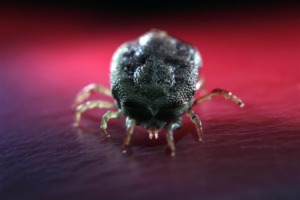
Adult tick Babesia sp. YLG © Patrick Landermann

We are familiar with spectacular epidemics, such as those linked to highly pathogenic avian influenza, which struck our region during the winter of 2026. When birds die in large numbers, the impact is visible and immediately measurable. But in nature, most infections go unnoticed. They do not cause mass mortality or obvious symptoms. What’s more, dead birds often serve as food and quickly disappear from the landscape. Yet these infections can affect the growth, physical condition or reproductive success of animals — with potential long-term consequences for populations.

Quantifying these impacts represents a major scientific challenge in understanding the dynamics of wild populations. This is demonstrated by a recent study conducted by the Tour du Valat and its partners on the yellow-legged gull (Larus michahellis). The researchers focused on a blood parasite that they had recently described with their colleagues from the National Veterinary School of Nantes: Babesia sp. YLG, transmitted by a tick vector (Ornithodoros (Alectorobius) maritimus) found in nests.

Monitoring the infection to measure its effects
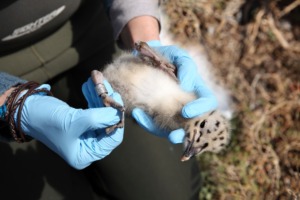
Searching for ticks on a gull chick © Patrick Landermann

The main challenge? Assessing the effects of a parasite that does not make the bird visibly ill. As conventional blood smear analyses are not always sufficient to detect subtle infections, the team developed a high-precision tool: a qPCR assay. This molecular technique makes it possible to detect minute traces of the parasite in the blood and measure the amount of pathogen present in each individual.

For three years, the scientists monitored two colonies of gulls to observe how the parasite circulated and what its real effects were on the birds’ lives.

An infection with varying impacts depending on age

The results highlight the different effects of the parasite depending on the stage of life of the individual:

• Chicks are more exposed than adults: The parasite is omnipresent in young birds. It is transmitted from the nest via ticks. It has been observed that the more a nest is infested with ticks, the more likely the chick is to be infected with Babesia. Infection peaks at around 37 days of age and then decreases as the young bird’s immune system strengthens.

• Impact on growth: Scientists have observed a significant slowdown in growth in infected chicks, greater than that associated with the direct impact of ticks. However, in seabirds, growth rate often determines the chances of survival.

• Repercussions on parents: Infection is rarer in adults but seems to weaken their physical condition. A striking observation: chicks are less likely to fledge successfully when one of their parents is carrying the parasite. It is as if, when faced with infection, adults prioritise their own survival at the expense of investing in their young.

• Once the chicks have fledged, their infectious status or that of their parents no longer affects their survival or movements.

Challenges for conservation

Taken individually, these impacts may seem modest. While Babesia sp. YLG does not decimate colonies, it acts as an additional stress factor. In a world where seabirds are already facing food scarcity and climate change, these infections can influence long-term population dynamics.

This study therefore highlights the importance of also focusing on the most inconspicuous pathogens.

Future research should now focus on the long-term consequences of this infection on population and community dynamics, and examine its impacts on the evolution of these populations in a rapidly changing world.


Publication reference

Buysse M., Ollagnier M., Souc C., Bruley M., Blanchon T., Leray C., Vittecoq M., McCoy K.D. 2025. Spatiotemporal Dynamics of Blood Parasite Infections and Impacts on Avian Health and Reproduction. Molecular Ecology n/a:e70178. doi: 10.1111/mec.70178

Contact

Marion Vittecoq | Research Director – Coordinator of Health Ecology and Species Conservation Themes
Agenda

March 19, 2026 at 10:00h

Webinaire – The Mediterranean Wetland Outlook 3 and the Mediterranean Wetlands Geoportal
Seminars • Mediterranean

April 25 - April 26, 2026

Weekend at the Tour du Valat agroecological farm – From Farm to Farm Festival 2026
Events • Camargue, France

May 13 - May 17, 2026

The Tour du Valat at the Camargue Festival 2026
Events • Camargue, France
All events

Newsletter

Keep up with Tour du Valat news:
Show previous newsletters
News Archives
  • 2026
  • 2025
  • 2024
  • 2023
  • 2022
  • 2021
  • 2020
  • 2019
  • 2018
  • 2017
  • 2016
  • 2015
  • 2014
  • 2013
Agenda Archives
  • 2024
  • 2023
  • 2022
  • 2021
  • 2020
  • 2019
  • 2018
  • 2017
  • 2016
  • 2015
  • 2014
  • 2013

Related
projects

All projects
Ongoing project
EcoHealth Transversal projects

Study of the links between hydrology and pathogenic agents

Camargue, France • 2015
Ongoing project
EcoHealth Transversal projects

Population dynamics of liver fluke in the Camargue

Camargue, France • 2015
Ongoing project
Species Conservation

Population genetics and major histocompatibility complex in the Greater Flamingo

Algeria, Camargue, France, Italia, Mauritania, Spain, Tunisia, Turkey • 1977
Ongoing project
EcoHealth Transversal projects

Antibiotic resistance in wildlife

Camargue, France, Sweden • 2012
Tour du Valat
Tour du Valat

Le Sambuc - 13200 Arles
France

Phone : +33 (0)4 90 97 20 13

[email protected]


Contact
  • Practical information
    • Calendar
    • Past events
    • Vacancies
    • Interactive map
    • Logo & access map
  • Legal information
    • Legal notice
    • Cookie policy (EU)
  • Linkedin
  • Facebook
  • Vimeo
  • RSS
Gérer le consentement aux cookies
We use cookies to enhance your experience on our web site.
Functional Always active
The technical storage or access is strictly necessary for the legitimate purpose of enabling the use of a specific service explicitly requested by the subscriber or user, or for the sole purpose of carrying out the transmission of a communication over an electronic communications network.
Settings
Le stockage ou l’accès technique est nécessaire dans la finalité d’intérêt légitime de stocker des préférences qui ne sont pas demandées par l’abonné ou l’utilisateur.
Statistics
The technical storage or access that is used exclusively for statistical purposes. Le stockage ou l’accès technique qui est utilisé exclusivement dans des finalités statistiques anonymes. En l’absence d’une assignation à comparaître, d’une conformité volontaire de la part de votre fournisseur d’accès à internet ou d’enregistrements supplémentaires provenant d’une tierce partie, les informations stockées ou extraites à cette seule fin ne peuvent généralement pas être utilisées pour vous identifier.
Marketing
The technical storage or access is required to create user profiles to send advertising, or to track the user on a website or across several websites for similar marketing purposes.
Manage options Manage services Manage {vendor_count} vendors Read more about these purposes
See settings
{title} {title} {title}