Tour du Valat
Tour du Valat
  • Navigation access
  • Content access
  • Footer access
  • Adopt a flamingo
  • Documentary portal
  • Search
  • fr
  • en
  • The Tour du Valat
    • History and values
    • The estate
    • Our team
    • Organisation chart and CVs
    • Governance and budget
    • Partners and sponsors
    • Visiting the Tour du Valat
  • Mediterranean wetlands
    • Types of Mediterranean wetlands
    • Threats, issues and protection
    • Spotlight on the Camargue
    • The Mediterranean Alliance for Wetlands
    • The Mediterranean Wetlands Observatory
  • Our actions
  • Media
    • The Library
    • Recent publications
    • Activity reports
    • The HAL portal
    • Books, booklets and reports
    • Institutionnal documents
    • Photo gallery
    • Videos
  • News
  • Our products
    • Agroecological products
    • Adopt a Flamingo
  • Navigation access
  • Content access
  • Footer access
  • Adopt a flamingo
  • Documentary portal
  • Search
  • fr
  • en
Tour du Valat
  • The Tour du Valat
    • History and values
    • The estate
    • Our team
    • Organisation chart and CVs
    • Governance and budget
    • Partners and sponsors
    • Visiting the Tour du Valat
  • Mediterranean wetlands
    • Types of Mediterranean wetlands
    • Threats, issues and protection
    • Spotlight on the Camargue
    • The Mediterranean Alliance for Wetlands
    • The Mediterranean Wetlands Observatory
  • Our actions
  • Media
    • The Library
    • Recent publications
    • Activity reports
    • The HAL portal
    • Books, booklets and reports
    • Institutionnal documents
    • Photo gallery
    • Videos
  • News
  • Our products
    • Agroecological products
    • Adopt a Flamingo
Research institute for the conservation of Mediterranean wetlands
  • Home
  • News
  • Publications
  • Protected area managers across Europe are adapting to climate change
Back to News
  • A- Switch to smaller font size
  • A+ Switch to biggest font size
  • Print
  • Share
  • RSS
Publications Europe • Published on 30 June 2026

Protected area managers across Europe are adapting to climate change

New research shows how climate change is reshaping protected area management, though more funding and scientific knowledge are needed to facilitate the process.

The Natura 2000 network, the world’s largest network of protect areas, aims at protecting important species and habitats across the European Union. Its traditional approach to conservation has focused on maintaining ecosystems in their historical conditions, but in a world characterised by a changing climate this may not be possible anymore, requiring adapting the conservation strategies.

Researchers conducted a large-scale survey across Europe aimed at Natura 2000 protected area managers, to investigate how they perceive and address the effects of climate change on biodiversity. The survey was conducted as part of the Scenarios for Protecting European Avian Redistributions (SPEAR) project focused on bird conservation, which involved partners from several European countries.
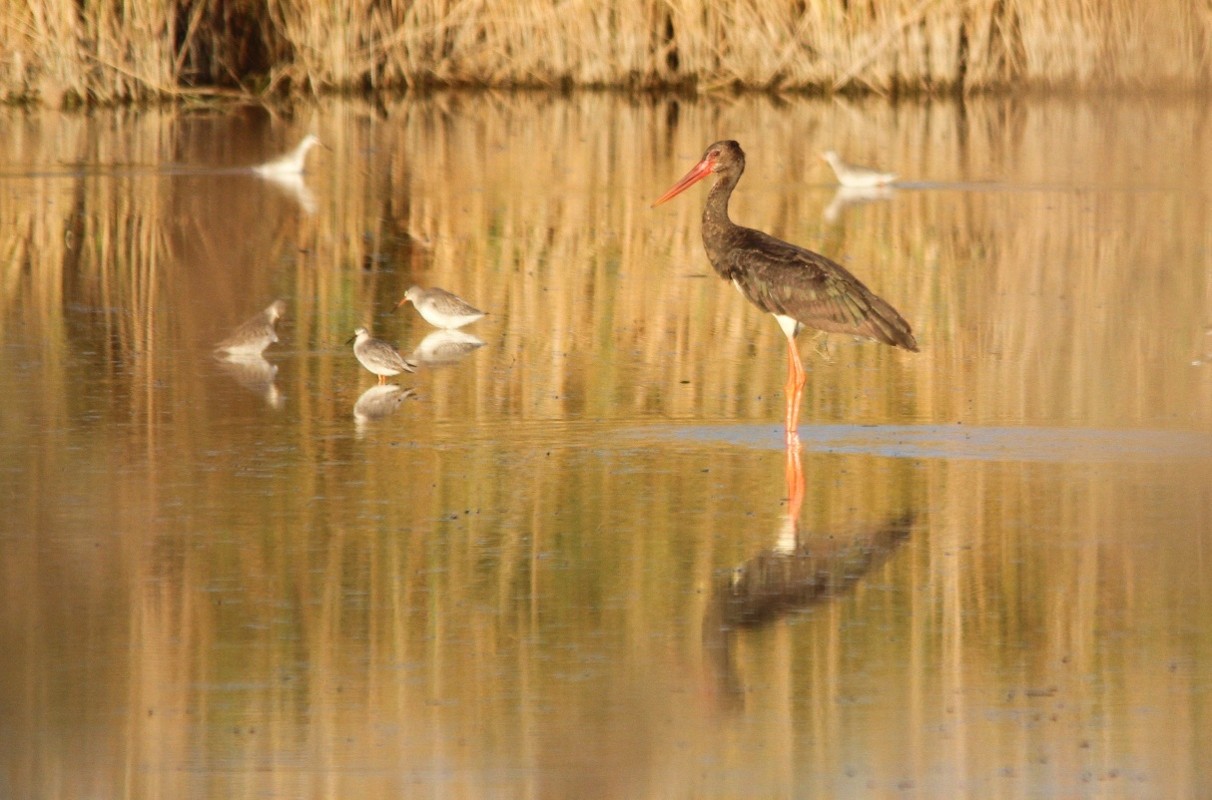
Birds in a Natura 2000 protected area. Birds are highly responsive to environmental changes, making them important indicators of ecosystem health. © Giorgio Zavattoni

Managers’ perceptions vary between regions

The findings show that over half of the managers already perceive climate change as a threat to biodiversity, with the majority of them already accounting for the impacts of climate change when planning management practices. Managers are particularly concerned about warming and changes in precipitations.

“Climate change is not equally perceived as a threat throughout Europe, for example managers in the Mediterranean region are more concerned than managers in the Boreal region, where for example Finland is located,” says the study’s first author, Doctoral Researcher Giorgio Zavattoni from the University of Turku, Finland.

Managers who perceive that their protected areas are vulnerable to climate change are also more likely to implement adaptation strategies.

“It was encouraging to see that over half of the managers consider the effect of climate change in their conservation management strategies, not only by trying to resist its effect but also by dynamically adapting to climate change and acknowledging that it transforms ecosystems,” says Professor Jon Brommer from the University of Turku.

European Commission’s new guidance strengthens adaptation strategies

This study came out at the same time as the European Commission published a new guidance on Natura 2000 and climate change, which is dedicated to strengthening adaptation strategies. The Commission notice clarifies legal flexibilities in the Birds and Habitats Directives, needs for strategic planning, and identifies practical adaptation measures.
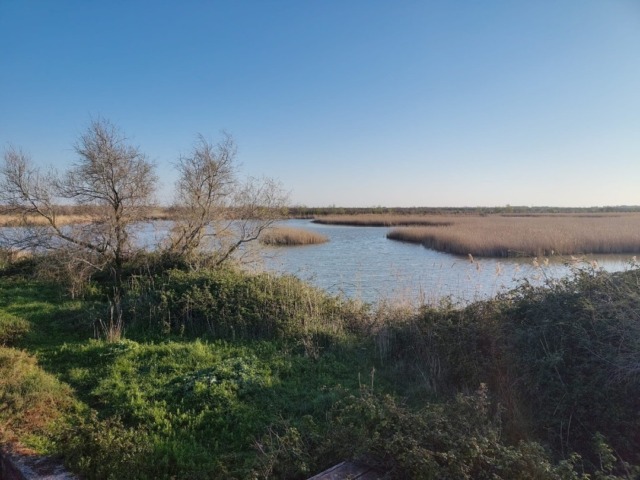
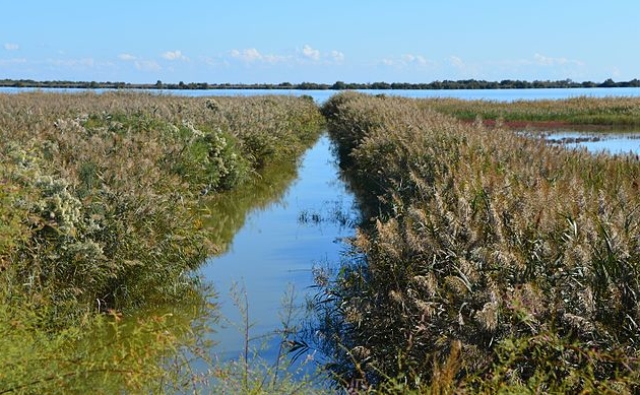
The Camargue, a vast wetland in France protected under the Natura 2000 network, supports rich biodiversity that is increasingly threatened by climate change. © Giorgio Zavattoni

“This guidance is welcome, because our study points out that many protected area managers are eager to learn more about the implementation of adaptation strategies,” says Dr Elie Gaget from the research institute Tour du Valat, France.

“However, managers also flagged the lack of scientific knowledge and financial resources to implement cost-effective climate adaptation strategies.” adds Gaget.

This study highlights the urgent need for researchers to take an increasingly important role in aiding managers by producing actionable knowledge, while also funding and capacity building support are strongly needed.


Publication reference:

http://dx.doi.org/10.1111/con4.70047


Contacts:

Elie Gaget, Tour du Valat, France, [email protected]

Giorgio Zavattoni, Department of Biology, University of Turku, [email protected]


En savoir plus :

  •  European Commission’s guidance on adapting Natura 2000 sites to climate change
  •  Le projet SPEAR
Agenda

June 29 - July 3, 2026

21st Conference of the Society of Wetland Scientists
Events • Europe
All events

Newsletter

Keep up with Tour du Valat news:
Show previous newsletters
News Archives
  • 2026
  • 2025
  • 2024
  • 2023
  • 2022
  • 2021
  • 2020
  • 2019
  • 2018
  • 2017
  • 2016
  • 2015
  • 2014
  • 2013
Agenda Archives
  • 2026
  • 2025
  • 2024
  • 2023
  • 2022
  • 2021
  • 2020
  • 2019
  • 2018
  • 2017
  • 2016
  • 2015

Related
projects

All projects
Completed project

Ecopotential

Camargue, France, Mediterranean • 2015-2019
Ongoing project
Dynamics and management of Hydrosystems and Coastal Areas

REST-COAST – Large scale restoration of coastal ecosystems through rivers to sea connectivity

Europe • 2021-2026
Ongoing project
Science-Society Interfaces

Adapting the management of Provence-Alpes-Côte d’Azur nature reserves to climate change

France • 2024 – 2025
Tour du Valat
Tour du Valat

Le Sambuc - 13200 Arles
France

Phone : +33 (0)4 90 97 20 13

[email protected]


Contact
  • Practical information
    • Calendar
    • Past events
    • Vacancies
    • Interactive map
    • Logo & access map
  • Legal information
    • Legal notice
    • Cookie policy (EU)
  • Linkedin
  • Facebook
  • Vimeo
  • RSS
Gérer le consentement aux cookies
We use cookies to enhance your experience on our web site.
Functional Always active
The technical storage or access is strictly necessary for the legitimate purpose of enabling the use of a specific service explicitly requested by the subscriber or user, or for the sole purpose of carrying out the transmission of a communication over an electronic communications network.
Settings
Le stockage ou l’accès technique est nécessaire dans la finalité d’intérêt légitime de stocker des préférences qui ne sont pas demandées par l’abonné ou l’utilisateur.
Statistics
The technical storage or access that is used exclusively for statistical purposes. Le stockage ou l’accès technique qui est utilisé exclusivement dans des finalités statistiques anonymes. En l’absence d’une assignation à comparaître, d’une conformité volontaire de la part de votre fournisseur d’accès à internet ou d’enregistrements supplémentaires provenant d’une tierce partie, les informations stockées ou extraites à cette seule fin ne peuvent généralement pas être utilisées pour vous identifier.
Marketing
The technical storage or access is required to create user profiles to send advertising, or to track the user on a website or across several websites for similar marketing purposes.
  • Manage options
  • Manage services
  • Manage {vendor_count} vendors
  • Read more about these purposes
See settings
  • {title}
  • {title}
  • {title}