
Yaprak Arda, Marine Programme Officer at IUCN Centre for Mediterranean Cooperation, answers our questions on the contribution of Nature-based Solutions (NbS) to biodiversity conservation in the Mediterranean, existing examples of implementation, barriers to large-scale deployment, and the role of the Mediterranean Biodiversity Consortium and the RESCOM project in accelerating their adoption.
1. What does the concept of NbS bring to the field of biodiversity conservation?
Nature-based Solutions (NbSs) represent a significant evolution in biodiversity conservation. They explicitly connect ecosystem protection, restoration, and sustainable management to the delivery of societal benefits such as climate mitigation and adaptation, water and food security, disaster risk reduction, and socioeconomic development. NbSs place biodiversity at the core of development planning by recognizing that healthy, functioning ecosystems are essential infrastructure for human well-being. Through the IUCN Global Standard for NbSs, the concept also brings a clear framework to ensure that actions are evidence-based, inclusive, economically viable, and deliver measurable benefits for both biodiversity and society. In this way, NbSs help shift conservation from being seen as a sectoral objective to a cross-cutting solution embedded in economic and social policy.
2. The concept is still emerging, but are there any successful cases of implementation in the Mediterranean?
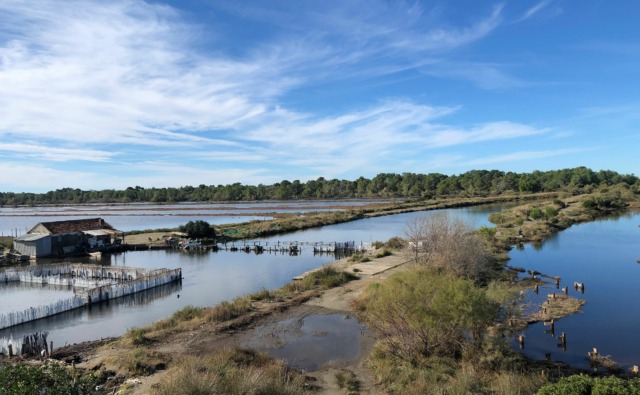
The Mediterranean already offers several promising examples of NbSs in practice, even if they were not always initially labelled as such. These include large-scale wetland restoration that enhance flood control and biodiversity, forest landscape restoration to reduce wildfire risk while boosting ecosystem resilience, and coastal ecosystem restoration — such as dunes, salt marshes, and seagrass meadows — to protect shorelines from erosion while supporting fisheries and carbon sequestration. Integrated water resource management approaches that restore river connectivity and natural floodplains also demonstrate how NbSs can simultaneously address water scarcity, climate adaptation, and habitat conservation in this climate-vulnerable region. Overall, these experiences show that NbSs can be successfully adapted to the specific social and ecological contexts of the Mediterranean.
3. What are the main obstacles to the large-scale deployment of NbS in the Mediterranean, and how can the CMB and the RESCOM project accelerate its implementation?
Key obstacles for scaling up Nature-based Solutions (NbSs) in the Mediterranean include fragmented governance frameworks, limited cross-sectoral coordination, and insufficient long-term financing. NbSs often require integrated planning across water, agriculture, urban development and conservation sectors, which is still difficult to reconcile with siloed public policies, short political and project cycles, land tenure complexities and competing land-use pressures. Active stakeholder engagement, clearer evidence on cost-effectiveness compared to grey infrastructure and stronger recognition of biodiversity as essential natural capital are also key issues.
In this context, the Mediterranean Biodiversity Consortium (MBC) and the RESCOM project can play a catalytic role. By promoting regional cooperation, aligning policy frameworks and facilitating knowledge exchange, they help to structure credible and measurable initiatives. Their action also helps to strengthen the skills of local actors, mobilise financing and develop replicable models adapted to the socio-ecological realities of the Mediterranean, and aligned with EU and international climate and biodiversity policies?