Tour du Valat
Tour du Valat
  • Navigation access
  • Content access
  • Footer access
  • Adopt a flamingo
  • Documentary portal
  • Search
  • fr
  • en
  • The Tour du Valat
    • History and values
    • The estate
    • Our team
    • Organisation chart and CVs
    • Governance and budget
    • Partners and sponsors
    • Visiting the Tour du Valat
  • Mediterranean wetlands
    • Types of Mediterranean wetlands
    • Threats, issues and protection
    • Spotlight on the Camargue
    • The Mediterranean Alliance for Wetlands
    • The Mediterranean Wetlands Observatory
  • Our actions
  • Media
    • The Library
    • Recent publications
    • Activity reports
    • The HAL portal
    • Books, booklets and reports
    • Institutionnal documents
    • Photo gallery
    • Videos
  • News
  • Our products
    • Agroecological products
    • Adopt a Flamingo
  • Navigation access
  • Content access
  • Footer access
  • Adopt a flamingo
  • Documentary portal
  • Search
  • fr
  • en
Tour du Valat
  • The Tour du Valat
    • History and values
    • The estate
    • Our team
    • Organisation chart and CVs
    • Governance and budget
    • Partners and sponsors
    • Visiting the Tour du Valat
  • Mediterranean wetlands
    • Types of Mediterranean wetlands
    • Threats, issues and protection
    • Spotlight on the Camargue
    • The Mediterranean Alliance for Wetlands
    • The Mediterranean Wetlands Observatory
  • Our actions
  • Media
    • The Library
    • Recent publications
    • Activity reports
    • The HAL portal
    • Books, booklets and reports
    • Institutionnal documents
    • Photo gallery
    • Videos
  • News
  • Our products
    • Agroecological products
    • Adopt a Flamingo
Research institute for the conservation of Mediterranean wetlands
  • Home
  • News
  • Newsletter articles
  • 3 QUESTIONS FOR Olivier Thérond, MAELIA platform development coordinator
Back to News
  • A- Switch to smaller font size
  • A+ Switch to biggest font size
  • Print
  • Share
  • RSS
Newsletter articles Camargue • Published on 1 July 2026

3 QUESTIONS FOR Olivier Thérond, MAELIA platform development coordinator

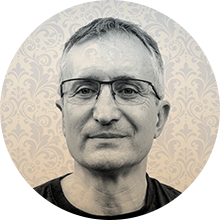
Olivier Therond, an agronomist with a passion for modelling, is the development coordinator for the MAELIA platform. He answers our questions about the future scientific challenges facing MAELIA-Delta, the prospects for implementing the model in other regions, and the importance of engaging with local actors in order to design a decision-support tool that is as closely aligned as possible with the realities of the Camargue.

1/ What are the next scientific challenges for making MAELIA-Delta correspond even more closely to the reality in the field?

MAELIA aims to integrate academic and local knowledge on the structure and dynamics of ecological and socio-economic systems and their interactions. In its current version, MAELIA-Delta models the interactions between agriculture and daily water flows in plots influenced by the climate. To achieve our objective of modelling the Camargue, we still need to incorporate the representation of water flows in irrigation and drainage canals, their relationships with lagoons and marshes, and the dynamics of the bird and fish species on which conservation priorities are focused. We already have most of the building blocks needed for these modelling extensions; the challenge now is to link them together in a coherent way. We will then need to enable MAELIA-Delta to quantify management indicators that are meaningful to stakeholders in the Camargue.

2/ Do you think this approach could be applied to other areas facing similar challenges?

We have designed the developments to be as generic as possible, meaning they can be applied to any region whose general characteristics are similar to those of the Camargue: natural and man-made water flows, hydro-salinity dynamics arising from the interactions between hydrology and irrigated agriculture. MAELIA-Delta is therefore intended to be used in other deltas to support local stakeholders in defining their parameters for balanced water management. But one thing at a time: we first plan to further develop the model before rolling it out in other areas.

3/ How have discussions with managers and local stakeholders influenced the development of the model?

As with any modelling process aimed at supporting decision-making, the issues raised by stakeholders involved in managing a territory determine and frame the development work. In Rose Rodier’s PhD thesis,[1] we implemented a conceptual modelling approach based on gathering and formalising the knowledge of local experts on these issues. This conceptual model enabled us to define the modelling objectives in detail, that is the entities and processes to be represented, the scenarios to be simulated, and the indicators to be assessed. The modelling process was therefore organised to meet these needs; this ensures the tool is relevant for addressing the questions raised by stakeholders in the Camargue.


[1] Rodier Rose, Olivier Boutron and Olivier Therond. 2026. ‘Integrated modelling of activity networks, ecosystem services and biodiversity on the Camargue Island. Assessment of the impacts of climate change and agroecological transition on a delta.’


Agenda

June 29 - July 3, 2026

21st Conference of the Society of Wetland Scientists
Events • Europe
All events

Newsletter

Keep up with Tour du Valat news:
Show previous newsletters
News Archives
  • 2026
  • 2025
  • 2024
  • 2023
  • 2022
  • 2021
  • 2020
  • 2019
  • 2018
  • 2017
  • 2016
  • 2015
  • 2014
  • 2013
Agenda Archives
  • 2026
  • 2025
  • 2024
  • 2023
  • 2022
  • 2021
  • 2020
  • 2019
  • 2018
  • 2017
  • 2016
  • 2015
Tour du Valat
Tour du Valat

Le Sambuc - 13200 Arles
France

Phone : +33 (0)4 90 97 20 13

[email protected]


Contact
  • Practical information
    • Calendar
    • Past events
    • Vacancies
    • Interactive map
    • Logo & access map
  • Legal information
    • Legal notice
    • Cookie policy (EU)
  • Linkedin
  • Facebook
  • Vimeo
  • RSS
Gérer le consentement aux cookies
We use cookies to enhance your experience on our web site.
Functional Always active
The technical storage or access is strictly necessary for the legitimate purpose of enabling the use of a specific service explicitly requested by the subscriber or user, or for the sole purpose of carrying out the transmission of a communication over an electronic communications network.
Settings
Le stockage ou l’accès technique est nécessaire dans la finalité d’intérêt légitime de stocker des préférences qui ne sont pas demandées par l’abonné ou l’utilisateur.
Statistics
The technical storage or access that is used exclusively for statistical purposes. Le stockage ou l’accès technique qui est utilisé exclusivement dans des finalités statistiques anonymes. En l’absence d’une assignation à comparaître, d’une conformité volontaire de la part de votre fournisseur d’accès à internet ou d’enregistrements supplémentaires provenant d’une tierce partie, les informations stockées ou extraites à cette seule fin ne peuvent généralement pas être utilisées pour vous identifier.
Marketing
The technical storage or access is required to create user profiles to send advertising, or to track the user on a website or across several websites for similar marketing purposes.
  • Manage options
  • Manage services
  • Manage {vendor_count} vendors
  • Read more about these purposes
See settings
  • {title}
  • {title}
  • {title}