
After 18 months of close collaboration between natural area managers in the Provence-Alpes-Côte d’Azur region and the coordinating organizations, the Natur’Adapt Sud project was completed in February 2026. This ambitious initiative leaves behind concrete tools and a strengthened regional momentum to face climate challenges.
Natur’Adapt Sud was launched in July 2024 and coordinated by la Tour du Valat in collaboration with the Conservatory of Natural Areas of PACA. The project engaged 13 natural reserves (7 national and 6 regional) in Provence-Alpes-Côte d’Azur. Its goal was clear: anticipate climate change in oder to adapt management practices in protected areas.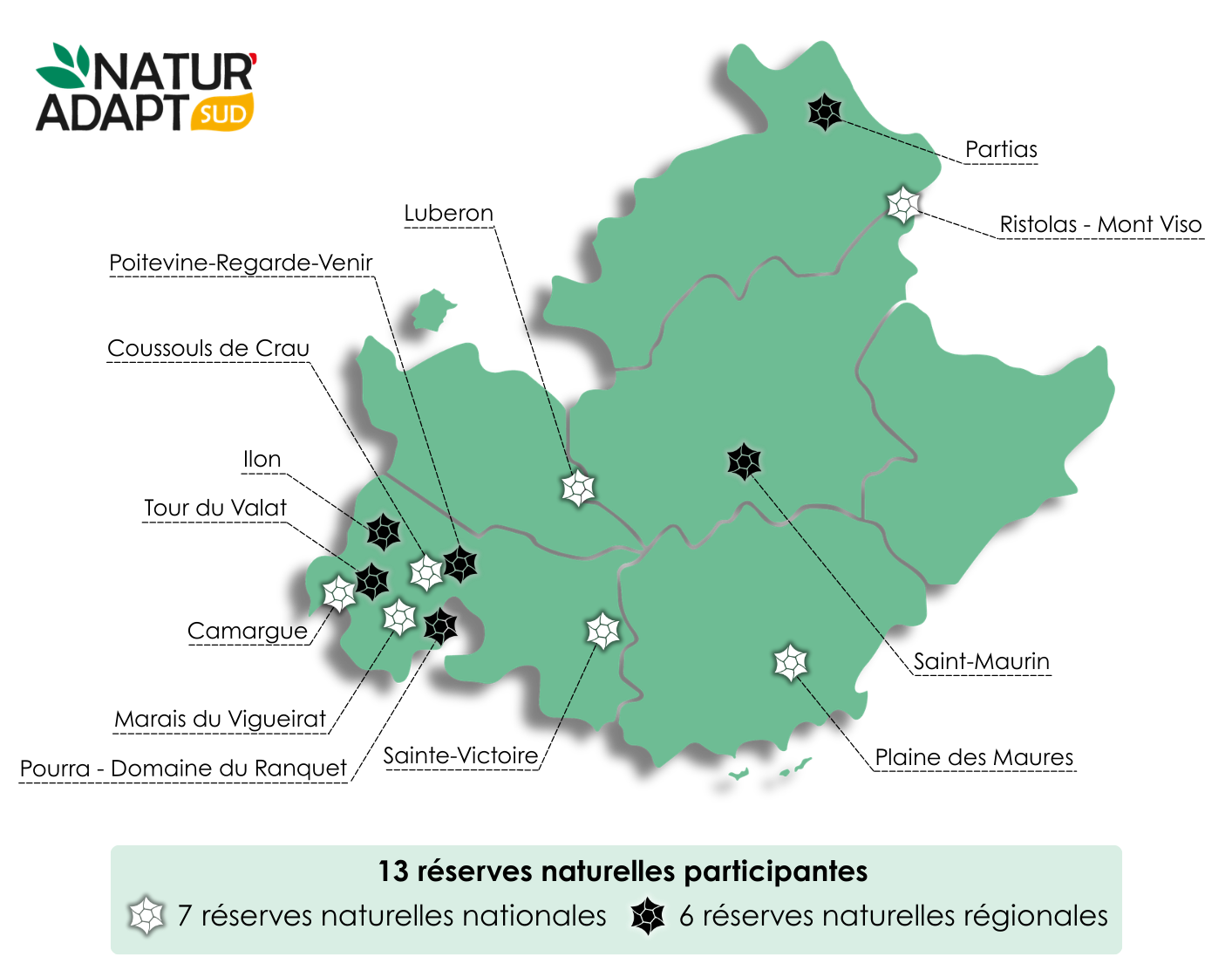
A quantified assessment reflecting the scale of the work
The project has resulted in an enhancement of the teams’ skills and the production of strategic documents:
- 13 vulnerability and opportunity assessments related to climate change, providing a detailed analysis of climate impacts on habitats and species in each reserve
- 13 adaptation plans developed (one per reserve), defining adaptation strategies and planned measures for both short and long term
- 28 professionals trained on climate issues through the Natur’Adapt training program (COOC), strengthening the internal expertise of managing organizations
- More than 150 working meetings and personalized support sessions with managers
- Broad stakeholder consultation: nearly 100 local actors (farmers, fishers, scientists, elected officials, tourism and fire prevention actors) were involved in the discussions
The strength of territorial facilitation and networking
Beyond technical outputs, Natur’Adapt Sud structured an unprecedented regional network dedicated to the exchange of best practices. As participants highlighted during the closing event: “We are stronger together” This collective momentum led to shared insights challenging the very foundations of nature protection:
- Putting on the “climate change glasses”: While adaptive management was already practiced on some sites, managers now integrate a more functional and dynamic vision of nature, marking a shift from “static” conservation aimed at maintaining past reference states.
- Acceptance of change: A strong consensus emerged on the need to accept irreversible ecosystem changes, questioning the limits of interventionism (restoration, assisted migration).
- Evolving regulatory frameworks: Exchanges highlighted a gap between current conservation missions and the upcoming shifts in natural heritage management under climate change.
- Climate change as a territorial opportunity: The theme is recognized as a chance to strengthen dialogue with local actors (farmers, fishers, elected officials).
- A shift in scale: The Natur’Adapt approach reinforces the understanding that broader spatial and temporal scales are essential to support future ecosystem changes.
And for la Tour du Valat?
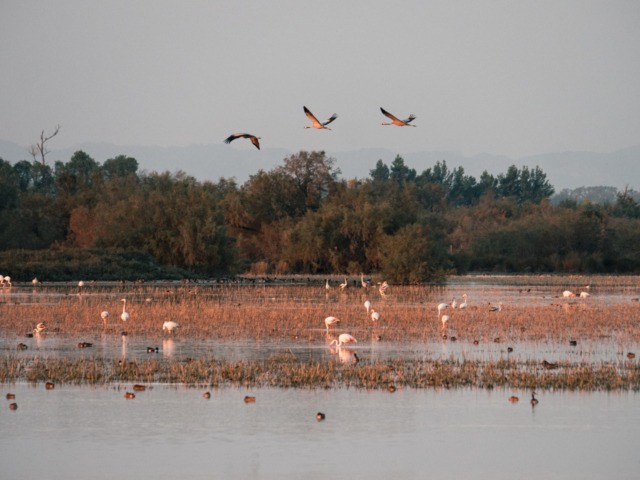
For la Tour du Valat, the analyses confirmed the vulnerability of emblematic habitats such as temporary ponds. The project’s adaptation strategy now focuses on strengthening ecological resilience and adaptive water management, aiming to anticipate and support changes in species assemblages such as wintering waterfowl.
Looking ahead: from planning to action
The project’s conclusion marks the beginning of the implementation phase. Adaptation plans will gradually be integrated into the official management plans of the reserves.
The major challenge now lies in sustaining this regional dynamic. Maintaining a functional network and securing funding for concrete measures will be decisive in transforming these adaptation strategies into lasting conservation outcomes that can withstand climate change.
The vulnerability assessments and adaptation plans for the reserves, carried out as part of the project, will soon be available online on the dedicated page.
Project leader: Noémie Nojaroff
Technical partners:
- Conservatoire d’Espaces Naturels de Provence-Alpes-Côte d’Azur (CEN PACA)
- Réserves Naturelles de France (RNF)
- Communauté de communes Alpes d’Azur (CCAA)
Financial partners:
- DREAL PACA (Fonds Vert 2024)
- Région Sud – Provence-Alpes-Côte d’Azur