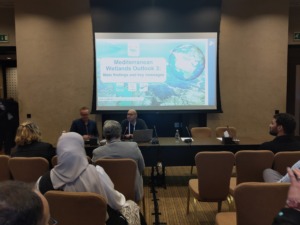
The 24th Meeting of the Contracting Parties to the Barcelona Convention (COP24) is being held from 2 to 5 December 2025 in Cairo (Egypt). On this occasion, the Tour du Valat and MedWet organized a side event to present the key findings of the third Mediterranean Wetlands Outlook 3 (MWO-3) and its recommendations for coastal wetlands.
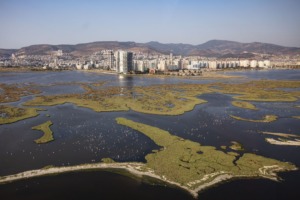
Mediterranean coastal wetlands are essential but threatened ecosystems
Mediterranean coastal wetlands (lagoons, coastal marshes, deltas, estuaries and seagrass beds) are vital habitats for both marine and coastal ecosystems. In addition to their biodiversity, they filter and purify water, sequester significant amounts of carbon and greenhouse gases, and protect the coastline from erosion, flooding and storms.
Despite their importance, Mediterranean coastal wetlands are among the most threatened habitats in the region. They are facin a ‘coastal squeeze’ that could result in the loss of 69 to 92% of coastal marshes by 2100. If urgent action is not taken, that loss could threaten the livelihoods and safety of coastal communities.
In the context of current environmental crises – climate change, water scarcity and biodiversity loss – these wetlands are Nature-Based Solutions, essential for supporting both ecosystems and local human activities: it is therefore urgent to ensure their conservation and restoration.
The MWO-3: a scientific tool for political action
Produced by the Mediterranean Wetlands Observatory (MWO), MWO-3 (2025) is the most recent and comprehensive scientific assessment of the state of Mediterranean wetlands. It combines ecological data, socio-economic analyses and recommendations for decision-makers, providing a decision-making tool for governments, local authorities and other stakeholders.
The MWO-3 is based on a structured analysis using 18 DPSIR indicators (Drivers – Pressures – State – Impacts – Responses), developed by the MWO in close collaboration with a large network of scientific and technical partners from the 28 member countries of the Ramsar MedWet Regional Initiative and beyond. This tool allows the analyse the dynamics at work: drivers of change such as demographics and climate; pressures on wetlands (artificialisation, pollution, water abstraction); assessment of their ecological status; observation of the impacts on biodiversity and ecosystem services; as well as the responses implemented at different scales.
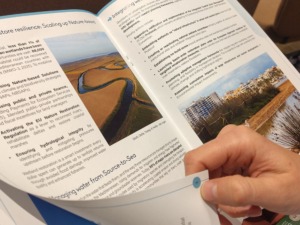
Accelerating the protection of coastal wetlands
The side event held during COP24 showcased the main conclusions of MWO-3, shared recommendations for strengthening wetland protection, and facilitated dialogue between scientists, policymakers and managers to promote the implementation of science-based solutions.
In addition, MedWet and the Tour du Valat proposed recommendations on coastal wetlands from MWO-3, notably by sharing their policy brief with participants.
This policy brief identifies several key levers to protect coastal wetlands:
- Align effective wetland management with their legal protection status
- Restore nature, restore resilience: develop Nature-based Solutions
- Manage water ‘Source-to-sea’
- Integrate wetlands into land use planning and urban development
- Strengthen regional cooperation and financing
Click here to consult the policy brief and its recommendations.
Through this side event, Medwet and the Tour du Valat aim to highlight how science can promote effective policy-making, encourage cross-border cooperation and accelerate the protection and restoration of coastal wetlands, which form the basis of Mediterranean resilience.
| COP24 of the Barcelona Convention
COP24 is the most important regional event for decision-making and protection of the marine and coastal environment of the Mediterranean. This meeting will bring together national authorities from Mediterranean countries and the European Union, as well as local and regional governments, international and regional organisations, scientists and technical experts, non-governmental organisations, representatives of the private marine and coastal sectors, and civil society organisations. Discussions will focus on how sea-related economic activities, such as tourism, maritime transport, fishing and coastal development can continue to grow while preserving marine ecosystems and strengthening resilience to climate change. |