In the Mediterranean, two people out of three live near a wetland: a vital heritage under severe pressure. The Mediterranean Wetlands Observatory shares five levers for action to change course.
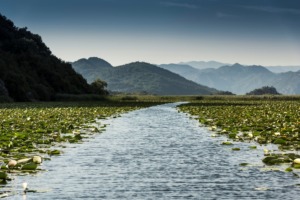
As World Wetlands Day approaches, the recent report released by the Mediterranean Wetlands Observatory (MWO) warns that despite their vital importance for populations and biodiversity, Mediterranean wetlands remain fragile ecosystems, subject to multiple pressures (intensive agriculture, overexploitation of water, artificialisation, and climate change) that are causing rapid and continuous losses. Historically, more than half of Mediterranean wetlands have already disappeared, and between 1990 and 2020 alone, losses are estimated at 12%.
Faced with this alarming situation, the MWO has identified five concrete and immediately actionable levers for change in Mediterranean wetlands. Preserving and restoring these areas is a strategic challenge for Mediterranean countries in order to ensure socio-economic resilience, peace and stability in the region.
As true natural infrastructures, Mediterranean wetlands provide essential ecosystem services to human societies: freshwater supply, support for agriculture and fishing, flood regulation, protection against coastal flooding, carbon storage, and mitigation of the effects of climate change. In a Basin home to nearly 590 million people, almost two out of three Mediterranean inhabitants live in close proximity to at least one wetland, highlighting the vital role these ecosystems play in water security, territorial protection, and livelihoods of Mediterranean populations. Human density around wetlands is on average four times higher than in the rest of the region, further reinforcing the strategic importance of these ecosystems for the resilience of societies. Wetlands are also among the richest ecosystems in the region: more than one third of Mediterranean biodiversity is concentrated in less than 2% of the territory, making wetlands major reservoirs of life and pillars in maintaining ecological balance.
Mediterranean wetlands under multiple pressures
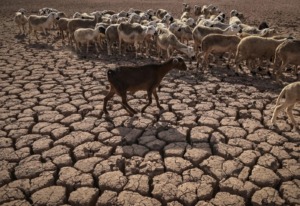
Intensive agriculture, the primary source of pressure
Today, nearly 30% of the functional space of Mediterranean wetlands is occupied by agriculture. While this sector remains essential for Mediterranean societies, it is intensive farming systems expanding rapidly, particularly in North Africa, Turkey, and the Iberian Peninsula, that exert the greatest pressure on wetlands. The conversion of natural wetland habitats into agricultural land leads to direct losses of environments, compounded by indirect impacts linked to the overexploitation of water resources for irrigation.
Growing tensions over water resources
Water demand continues to rise in the Mediterranean Basin and could triple by 2050, driven mainly by irrigation, which already accounts for nearly two-thirds of total water withdrawals. At the same time, per capita water availability has fallen by around 40% over the past 30 years in southern and eastern Mediterranean countries, exacerbating the drying up of wetlands in regions already experiencing critical water stress. To secure water supply, rivers are increasingly being equipped with dams disrupting natural flows: 95% of the length of major Mediterranean rivers is now impacted, reducing the water inputs essential for sustaining downstream wetlands.
Urban pressures and land artificialization
At the same time, rapid urbanisation is placing increasing pressure on Mediterranean wetlands, particularly along coastlines and in large alluvial plains. Since 2000, artificial surfaces around wetlands have increased by 44%, driven by urban sprawl, transport infrastructure, and tourism development. Soil sealing limits water infiltration, increases runoff, and fragments habitats, further weakening wetlands’ capacity to fulfil their natural functions.
Climate change: a risk multiplier
Climate change further amplifies these pressures. By 2100, average temperatures in the Mediterranean Basin could rise by +1.7°C to +5.2°C, while average annual precipitation could decrease by -1% to -5%, or even up to -30% in some regions such as the Near-East. Mediterranean coastal wetlands are particularly vulnerable: Mean Sea Level Rise (MSLR), coupled with reduced sediment and freshwater inputs, notably due to the proliferation of dams, could lead to the disappearance of 69% to 92% of coastal marshes by the end of the century.
Direct impacts on biodiversity and territories
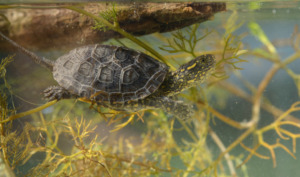
These cumulative pressures have major consequences for biodiversity and territories. Today, 40% of species associated with wetlands are threatened, rising to 69% for species endemic to the Mediterranean Basin. However, it is the diversity of species and their interactions with their environments that enable wetlands to function, deliver essential services to populations and support key economic activities such as fishing, agriculture, and tourism. The degradation of biodiversity therefore directly undermines the ecological, economic, and social resilience of Mediterranean territories.
“We are rapidly destroying a resource on which we depend, even though these environments are an important part of the solution”
According to Anis Guelmami, coordinator of the MWO: “Dried out, degraded, and disappearing in the face of mounting pressures, we are rapidly destroying a resource on which we depend, even though these environments are an important part of the solution: their ability to store carbon, regulate the local climate in urban areas, absorb excess water during extreme events, and protect coastlines from erosion and storms demonstrates the central role of wetlands in tackling climate change. Not to mention the wide range of services they provide: food supply, tourism, culture, leisure, drinking water, to name just a few. With per capita water availability having fallen by 40% in 30 years in the southern and eastern Mediterranean, urgent action is needed!”
Five levers to reverse the trend
The report by the MWO emphasizes that the current trajectory is reversible, provided that action is taken quickly and on a large scale.
- Reconcile land use planning and wetlands: Fully integrate wetlands into spatial planning documents as Nature-Based Solutions. Limiting land artificialisation, establishing buffer zones around sensitive ecosystems, and taking into account cumulative impacts on ecological connectivity are among the actions to be implemented. In parallel with targeted de-artificialisation strategies, such as soil renaturation and river re-meandering, critical hydrological functions can be restored.
- Accelerate ecological restoration: nearly 88,000 km² of wetlands along the northern Mediterranean shore, from Portugal to Turkey, mainly agricultural areas, could be restored at low cost (reconnection to the natural flooding regime, change in management practices, etc.), with rapid benefits for biodiversity, water management, and local economies. To date, 224 priority wetlands covering nearly 4,000 km² have been identified for restoration in 24 MedWet countries.
- Making water policies a cross-cutting lever: integrating ecological flows into water management plans, restoring hydrological continuity, coordinating human uses with ecosystems needs, and promoting innovation and water efficiency are among the range of solutions to be deployed. For example, modernising irrigation systems in Mediterranean countries alone could reduce water consumption by 35%, while the reuse of treated wastewater, currently limited to only 20% in the MENA region, remains a largely untapped under-exploited solution.
- Mobilize citizens and local initiatives: Local communities, farmers, associations, and researchers are often the first line of defence for wetlands, combating local pressures such as pollution, overuse, and poaching, while also contributing to ecological monitoring and developing sustainable economic activities. Recognizing their role and fully involving them in management and restoration decisions is essential to safeguarding Mediterranean wetlands.
- Strengthen regional governance and coordination: Effective wetland conservation depends on robust, coordinated and participatory governance structures. Significant disparities in institutional capacity between Mediterranean countries and fragmented responsibilities currently undermine actions. Strengthening environmental institutions, improving coordination between countries, and recognising the role of local stakeholders are essential. At the regional level, cross-border cooperation, harmonised indicators, and shared expertise are key to ensure coherent and effective action.
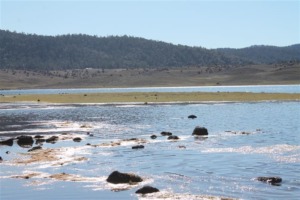 The example of the Sebou Water FundLaunched in Morocco in 2019, the Sebou Water Fund is one of the first operational mechanisms in the Mediterranean to finance conservation actions through a Payment for Ecosystem Services (PES) model. Developed through a partnership involving public authorities, local communities, civil society, and the private sector, this fund aims to improve water quality and availability in the basin. Downstream users (water services, municipalities, businesses) contribute financially to upstream actions such as reforestation, soil conservation, rehabilitation of degraded wetland habitats, and the promotion of sustainable agricultural practices. |
Key figures
|
The Mediterranean Wetlands Observatory (MWO)The Mediterranean Wetlands Observatory (MWO), coordinated by the Tour du Valat, was created in 2008 as part of MedWet, the Ramsar Convention’s regional initiative for the Mediterranean. This observatory is dedicated to the production, synthesis, and dissemination of knowledge on wetland ecosystems in the Mediterranean basin. It operates on three levels: regional, national, and local, in collaboration with the 27 member countries of MedWet. The scope of the study thus covers all of these countries, divided into four sub-regions: Southwest Europe, the Balkans, the Near East, and the Maghreb. |
Click here to download the full report
Contacts
Anis Guelmami – Project manager – Coordinator OZHM – [email protected]
Coralie Hermeloup – Communications Manager – [email protected]