
Wetlands for climate change adaptation and mitigation.
Project objectives
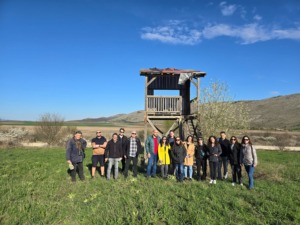
Wetland4Change is an INTERREG Euro-MED project (2024–2026) that aims to test and validate wetland-based solutions for climate change adaptation, risk prevention, and impact mitigation.
The project focuses on two essential ecosystem services provided by wetlands: carbon sequestration and flood regulation. These solutions are tested across five Mediterranean pilot sites: Albufera de València (Spain), Camargue–Durance (France), Oristano lagoons (Italy), Lake Kerkini and the Strymon basin (Greece), and the Struma basin (Bulgaria).
Actions & methodology
Role of the Tour du Valat
The Tour du Valat plays a central role in Wetland4Change. It coordinates the Flood Regulation Work Package, which develops a shared methodology to map and quantify the role of wetlands in flood mitigation. It also mobilises the expertise of the Mediterranean Wetlands Observatory to integrate, analyse and showcase data from all pilot sites.
The Tour du Valat contributes to the creation of a Mediterranean wetland knowledge base and geoportal, ensuring long-term accessibility and reuse of project results. It also serves as Data Controller and Data Protection Officer (DPO) for Wetland4Change.
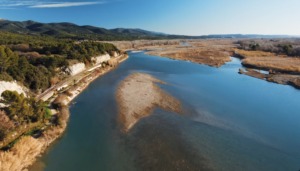
Camargue–Durance pilot site
The French pilot site combines the Camargue and the Durance basin. In the Camargue, the project studies the contribution of wetlands to carbon sequestration. In the Durance basin, it evaluates their capacity to reduce flood risks.
This combined approach helps understand how interconnected wetlands, from the upper catchment to the delta, can mitigate flooding and strengthen the resilience of Mediterranean territories.
Explore the Wetland4change project
Team
Project manager: Anis Guelmami
Members involved: Michaël Ronse, Loic Willm, Nina Bègue
Teams involved: Science-Society Interface, Dynamics and management of Hydrosystems and Coastal Areas
Project duration: 2 January 2024 to 2 October 2026 (33 months)
Partenaires
Technical partners
- Department of Ecology and Landscape Architecture, University of Forestry (Bulgarie), coordinateur du projet
- The Goulandris Natural History Museum – Greek Biotope/Wetland Centre (GNHM-EKBY) (Grèce)
- Cavanilles Institute of Biodiversity and Evolutionary Biology, University of Valencia (Espagne)
- Mediterranean Sea and Coast Foundation MEDSEA (Italie)
- European Topic Centre for Spatial Analysis and Synthesis, University of Malaga ETC-UMA (Espagne)
Financial partners
- INTERREG EuroMed Transnational Cooperation Program