For several decades, bird ringing programmes have been a key source of data for the study of bird populations . These programmes are used, notably, to monitor population dynamics, the physical condition of individuals and the responses of species to environmental changes such as climate change. The reliability of the morphometric measurements collected during these programmes is therefore a significant issue.
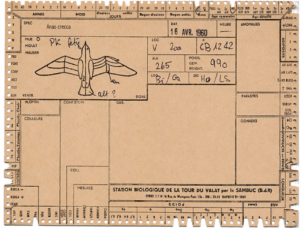
A recent study, based on historical data collected at the Tour du Valat between 1952 and 1978, highlights the existence of operator-related inaccuracies (arising from the person taking the measurement) in morphometric measurements carried out as part of long-term ringing programmes. It analyses the extent of these inaccuracies according to the size of the species concerned and the morphological characteristics measured.
Generally robust measurements of wing length
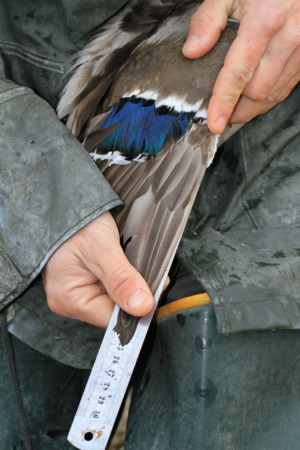
The analysis covers 17,818 individuals belonging to 14 bird species, for which three morphometric parameters were examined: wing length, body mass and a body condition index.
The results show that wing length exhibits low variability between ringers, with a deviation from the mean of less than 1% of the total measurement. This measurement therefore appears to be robust overall, even in a context involving numerous ringers and surveys carried out over a long period.
Greater variability in body mass and body condition index
In contrast, greater differences between operators are observed for body mass, with variations of up to 10% of the total measurement. The body condition index, calculated from body mass and wing length, shows similar results, directly reflecting this variability.
These variations show that certain measurements are influenced by species characteristics, the equipment used (such as dynamometers), and the specific practices of each operator.
Greater effects in larger species
The study also shows that larger species (such as Mallard ducks) are proportionally more affected by these variations in measurement. This finding suggests that the size of the individuals is a key factor in the extent of the discrepancies observed between operators.
A key challenge for the analysis of long-term datasets
These findings highlight the importance of taking observer-related effects into account when analysing long-term ringing data. They suggest that particular attention should be paid to the measurement of morphological characteristics, especially in larger species.
Beyond this observation, this study helps to improve documentation of the sources of variability in field data, which is essential for enhancing the accuracy of ecological analyses based on long-term monitoring.
Publication reference:
Martinais, Y., Gaget, E., Guillemain, M., & Francesiaz, C. (2026). Evidence for a relationship between bird body size and uncertainty in individual morphological measurements at ringing. Bird Study, 1–13. https://doi.org/10.1080/00063657.2026.2686446 [1]
Contact :
Elie Gaget [2], Tour du Valat, France