The new scientific study, “Monitoring major biodiversity stronghold in war zones: model predicts Lake Chad remains Africa’s most important wetland for waterbirds”, published in PNAS, estimates that Lake Chad supports nearly 2.5 million waterbirds, making it one of the most important wetlands for birdlife in Africa. Conducted in a region affected by insecurity, the research also suggests that some conflict zones may unexpectedly serve as refuges for biodiversity.
Lake Chad is often associated with the security, humanitarian, and climate challenges facing the region. However, a new international study highlights another reality: an exceptional ecosystem that continues to support remarkable biodiversity despite more than a decade of conflict.
Using aerial surveys conducted under rigorous scientific protocols and advanced spatial modelling techniques, researchers from Tour du Valat and the French Biodiversity Agency (Office Français de la Biodiversité – OFB), in partnership with the NGO Wings for Conservation and Chad’s Department of Wildlife and Protected Areas, produced the first comprehensive estimates of Lake Chad’s waterbird populations since 2008.
The results are striking: approximately 2.48 million waterbirds are estimated to use the site, making it likely the largest concentration of wetland birds on the African continent.
An Unexpected Refuge for Wildlife
Contrary to common assumptions, researchers found that some species have maintained or even increased their populations in recent years. Several conflict-affected areas even showed higher animal densities than more accessible sectors.
This pattern may be explained by a “refuge effect”. Reduced human activities—including fishing, grazing, and hunting—may have created favourable conditions for wildlife.
However, the researchers caution that these encouraging findings should not obscure a more nuanced reality. While some species appear to be benefiting from current conditions, others are experiencing worrying declines, highlighting the vulnerability of this globally important ecosystem and the need for continued monitoring and conservation efforts.
Is Biodiversity Monitoring Possible in Conflict Zones?
Historically, Lake Chad was widely recognised as a major site for migratory waterbirds, comparable to the Inner Niger Delta in Mali. However, due to conflict and the resulting security challenges, scientific monitoring—including the International Waterbird Census, which tracks population sizes and trends—has not been conducted regularly since the 2000s.
Without ecological data from these key sites, estimating the size and trends of bird populations becomes extremely difficult.
“By combining adapted aerial sampling methods with spatial modelling, we were able to estimate wildlife abundance across vast and difficult-to-access territories while limiting risks to observers,” explains Pierre Defos du Rau, one of the study’s authors.
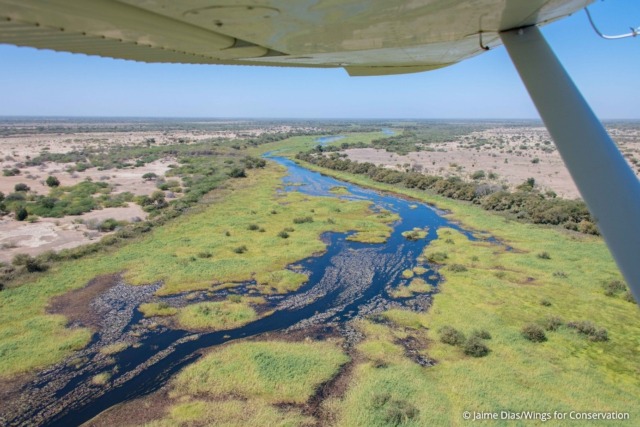
A Global Challenge for Biodiversity and Food Security
Lake Chad plays a crucial role for migratory birds travelling annually between Africa, Europe, and Asia. Conserving this wetland is therefore an international responsibility.
Beyond its ecological importance, the site also supports local livelihoods. Waterbirds and the resources associated with wetland ecosystems contribute directly to the food security of many communities living around the lake.
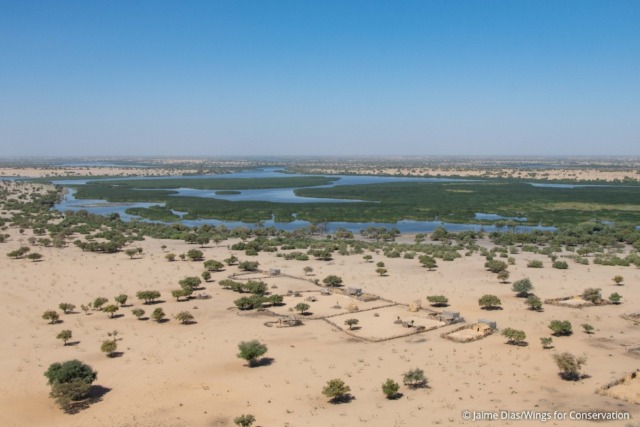
A Call for Stronger International Protection
In light of these findings, the researchers call for strengthened protection of Lake Chad through the creation of a large-scale protected area and the inscription of the site on the UNESCO World Heritage List.
Scientific monitoring of this kind is essential for understanding changes in wildlife populations and informing future conservation strategies.
At a time when wetlands are disappearing worldwide at an alarming rate, Lake Chad stands out as a natural heritage site of exceptional global importance, whose preservation is vital both for biodiversity and for local communities.
Publication reference:
Defos du Rau P., Godeau U., Carenton N., Dias J., Wachoum A.S., Trolliet B., Baddour K., Chaibo A., Morin G.P., Portier B., Suet M., Tormos T., Mondain-Monval J.-Y., Deschamps C. 2026. Monitoring major biodiversity stronghold in war zones: Model predicts Lake Chad remains Africa’s most important wetland for waterbirds. Proceedings of the National Academy of Sciences 123:e2603538123. doi: 10.1073/pnas.2603538123 [1]
Contact:
Clémence Deschamps [2], Project Manager, Tour du Valat, [email protected] [3]