As part of the Wetland4Change project, a field campaign was carried out in the Camargue from 9 to 13 March 2026, with the aim of improving the assessment of wetlands’ capacity to sequester carbon and contribute to climate change mitigation.
The aim? To better quantify both carbon stocks and greenhouse gas fluxes, in order to understand the role of wetlands as Nature-based Solutions.
This campaign brought together teams from the Tour du Valat and the University of Valencia, creating a powerful moment of scientific exchange. In particular, the Valencian team presented its methodology for measuring carbon fluxes, based on fieldwork and satellite image analysis, helping to harmonise protocols and enhance the robustness and comparability of the analyses currently being carried out across the various study sites.
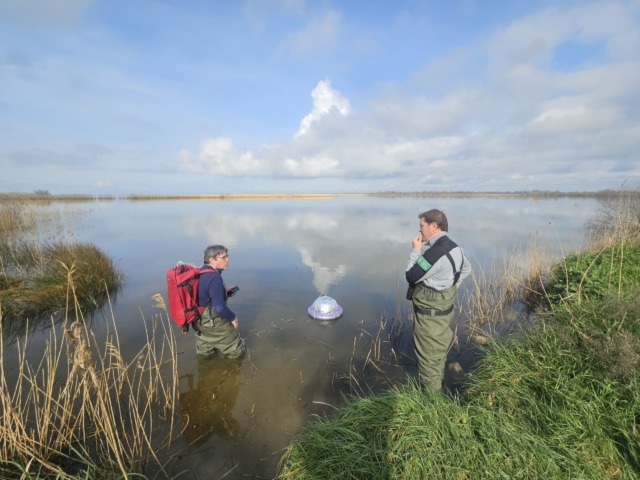
Beyond scientific collaboration, this mission also provided an opportunity to strengthen ties with wetland managers. Representatives from the SNPN took part in a field day, which provided a practical setting to discuss the implementation of flow measurements and their value for management and decision-making.
This initiative is fully in line with the work carried out in the Camargue and, more broadly, across the Mediterranean region. By drawing on existing datasets, long-term monitoring programmes and sound expertise, it helps to consolidate a robust scientific basis for assessing ecosystem services linked to climate regulation. In the short term, it will enable us to refine estimates of carbon stocks and greenhouse gas fluxes in the Camargue wetlands, thereby improving their accuracy and consistency.
Next step: analysing the data collected and continuing discussions on the findings. These will be presented at the Wetland4Change Living Lab, scheduled for June in the Camargue, which will bring together researchers, managers and stakeholders to discuss the methods, findings and their implications for wetland management.