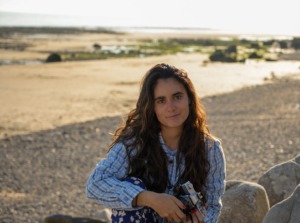
 Constance Audiffren, project manager for ‘Marine Environment Protection – Wind Power & Industry’ at the French Biodiversity Agency (OFB), Mediterranean Coast Delegation, PACA-Corsica Interregional Directorate, answers our questions about the OFB’s involvement in the Migralion project.
1) What is the OFB’s role in the Migralion project (and in relation to wind turbine projects?)
The OFB is the project manager for the Migralion contract and co-finances part of it alongside the ministries of biodiversity and energy and the Sud and Occitanie Regions. Within the Migralion programme, the OFB occupies a strategic coordination position. It acts as a cross-functional interface between all the members of the scientific and technical consortium, on the one hand, and the government departments with which it collaborates extensively, on the other. This steering role enables the OFB to maintain an overall vision that brings together the scientific, technical, and institutional dimensions of the project.
In concrete terms, supported by the Migralion steering committee, the Mediterranean coast delegation is in charge of several operational tasks: reviewing and validating deliverables, receiving and organising the data collected, and all administrative and financial monitoring of the project. Although the latter is quite tedious, it is an essential part of the steering process and remains indispensable to ensuring the programme runs smoothly.
However, the OFB does not participate in political decisions such as offshore wind farm planning. Its involvement is limited to advising government departments, particularly for new projects. This advisory role comes into play specifically when projects concern areas with specific environmental issues, such as Natura 2000 sites or any other marine protected area. In any case, the OFB’s expertise relates exclusively to issues linked to biodiversity protection.
2) What do you think makes the Migralion programme innovative?
The Migralion project is innovative in several ways:
A significant data acquisition effort, both in terms of time, with three continuous years of collection, and space, thanks to a sampling plan designed to cover a large part of the Gulf of Lion, from the coastal strip to areas further offshore.
Technological diversity combining several approaches: telemetry, acoustic tracking, sea campaigns using on-board radars, coastal radars, etc. The technical resources put in place are substantial, which is a strength. Regarding telemetry, although the methodology has already been established, the project stands out for equipping species that had never been tracked in this way before, such as the Collared Pratincole, the Black-winged Stilt, the Kentish Plover, and the Yellow Wagtail.
The major innovation lies in the ultimate goal: to bring together these highly heterogeneous data sets—whether in terms of the type of information collected, their technical specificities, or the acquisition methodologies—to develop models capable of analyzing this wide range of data and formulating coherent conclusions. In my opinion, the Migralion programme should be given a prize for this highly innovative approach!
3) What lessons can be learned after four years of the project? What is the next step?
The first striking element remains the structural organization of the project, with a scientific consortium whose strength and diversity are a real asset. The variety of partners involved—ornithological associations, the Institute for Energy Transition, academic researchers, consulting firms—has generated a particularly fruitful dynamic that has been felt throughout these four years. In addition, the complementarity of their expertise represents real added value and a formula that has proven its worth.
The conclusions of the Migralion project are unprecedented information of which we can be very proud! Never before have such resources been deployed on such a large scale. Migralion has answered the scientific questions we were raising: preferred migration routes are emerging and differ depending on the period before or after breeding. The seabirds tracked as part of this study occupy a large area of the Gulf during the wintering period. The flight heights of the tagged birds indicate that half of them fly at heights within the range of wind turbine blades. All these elements will inform future decisions. However, questions remain, and the programme’s assessment highlights the importance of continuing to acquire knowledge, which is essential for informed management. We have also conveyed the message that it is necessary to continue this approach to fill the remaining gaps, particularly with regard to small migrants such as passerines, which represent a very significant proportion of the recorded migratory flows.
Other wind energy projects in which the OFB is involved:
- MODELCET MED Model 7 Mediterranean, launched in September 2024 for a period of three years. This program is funded by the National Offshore Wind Observatory and led by the Mediterranean Coastal Delegation. This predictive modeling project aims to map the use of space by cetaceans in the Mediterranean and identify the functional areas of these species, using an approach similar to Migralion, which focuses on the Gulf of Lion. Unlike Migralion, this programme does not involve the acquisition of new data but relies on the collection of existing data. A promising collaboration is currently being finalized with several Italian institutes that have a developed monitoring network. The diversity of data sources—whether opportunistic or scientific—will feed into the development of mathematical models capable of processing these heterogeneous datasets using a variety of methodologies
- Migratlane: the Atlantic extension inspired by Migralion. Launched in 2023 and funded by the French National Offshore Wind Observatory, Migratlane has a larger budget than Migralion (around €10 million) due to its extended spatial coverage of the Atlantic coastline, the English Channel, and the North Sea. This project is, in a way, Migralion’s “big sibling”, its design stemming directly from the same methodology, which confirms the innovative nature of the initial approach. The objectives are identical to those of Migralion, with several years of data acquisition still to come. Migratlane will provide new information on species that have been very poorly documented until now, such as the recent discovery of the migratory route of bats between Calais and England.