At the heart of our estate, a pine forest planted after the Second World War is home to small ponds nestled on a dune ridge that is thousands of years old. At first glance, they seem peaceful. Yet they tell a fragile story.
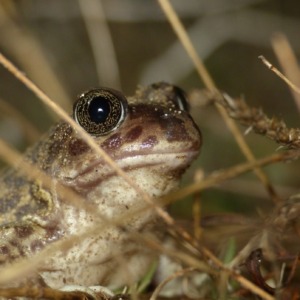
These ponds host a freshwater ecosystem vital to many species. Among them is the spadefoot toad (Pelobates cultripes): a small amphibian that is as discreet as it is endangered, choosing these ponds for reproduction each mating season. But over the past decade, something has been changing. The oak trees in the pine forest are dying. Some reed beds are losing their vitality. And the water… is gradually becoming saturated with salt.
Why ?
Less rain, more evaporation due to global warming… but perhaps also invisible exchanges with surrounding aquifers, whose salinity varies according to the seasons and the management of irrigation and drainage channels.
To understand these mechanisms, scientists at the Tour du Valat are closely monitoring changes in the ponds: salinity measurements every two weeks, installation of piezometers throughout the site, analysis of underground water movements…
The aim? To identify the causes and, if possible, take action to curb this phenomenon.
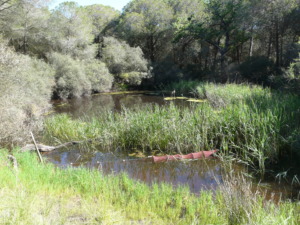
This winter, heavy rains have allowed the ponds to fill with fresh water, providing pelobates with optimal conditions for reproduction. Hope is therefore reborn for this protected species.
At the Tour du Valat, cultivating vines also means watching over these invisible balances. Here, each plot tells a story of agriculture and biodiversity coexisting together.
| Identity card of the common spadefoot toadSize: 7 to 10 cm long
Identification criteria: Its hind legs are equipped with ‘knives’, allowing it to burrow vertically into the sand. Its back is yellowish-grey dotted with chocolate brown spots. Behaviour: The Pelobates is only active on certain nights. During the day, it creates small underground burrows (except during the breeding season). Status: protected species Chant : A soft, muffled “ko-ko-ko” sound, reminiscent of a hen’s clucking, which can be heard in the audio below https://tourduvalat.org/wp-content/uploads/2026/03/PABLOD_1.mp3 [1] |