The new 2025 cuvées from the Tour du Valat agroecological farm have arrived!
This year, Tour du Valat wines are reinventing themselves with a completely redesigned visual identity. From Dune, Plume, Roseau, Élégante, Doré, Étoilé, and Pourpré Sauvage to Immortelle and Sultane, each new cuvée draws inspiration from a species or natural habitat emblematic of the Camargue wetlands.
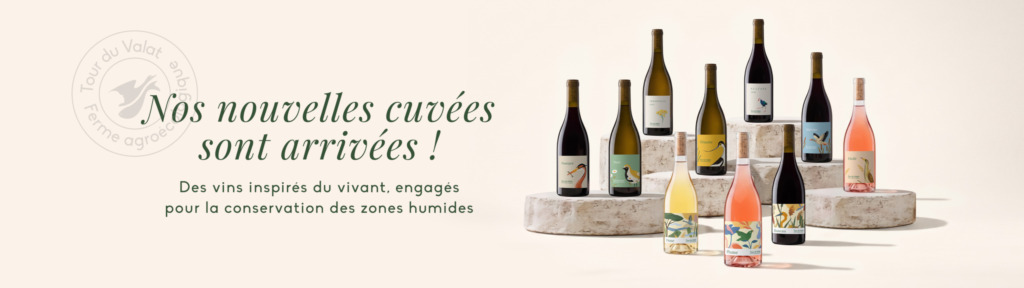
Produced using organic farming methods, these wines derive their character from a terroir where agriculture and nature mutually enrich one another. At Mas du Petit Saint-Jean, the vines grow in tune with the natural equilibrium: cover cropping between rows, eco-grazing by sheep, pollinator-friendly hedgerows, bat boxes for natural pest control, hand-harvesting, and agroecological practices designed to meet tomorrow’s challenges. Some grape varieties have even been selected for their resilience to climate change.
The result? Limited-production wines, made on site, that tell the story of the species and environments they help to protect.
Beyond the pleasure of enjoying fine wines, every bottle supports the work of Tour du Valat, a research institute dedicated to the conservation of Mediterranean wetlands since over 70 years.
Discover our new cuvées and support farming practices that protect nature and living things >> [1]
This summer, treat yourself to our rosé wines: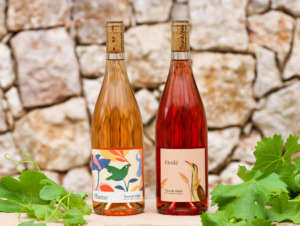 Plume evokes the pink flamingos that inhabit the ponds of the Camargue. Light, fresh, and sociable, it is the perfect companion for moments shared under the Mediterranean sun. Add food pairing. Étoilé, a rosé de saignée, with more intense aromas, takes its name from the Great Bittern, an elusive bird emblematic of wetlands that finds refuge in the reed beds. A wine with real character, reflecting the species that inspired it. Add food pairing. |
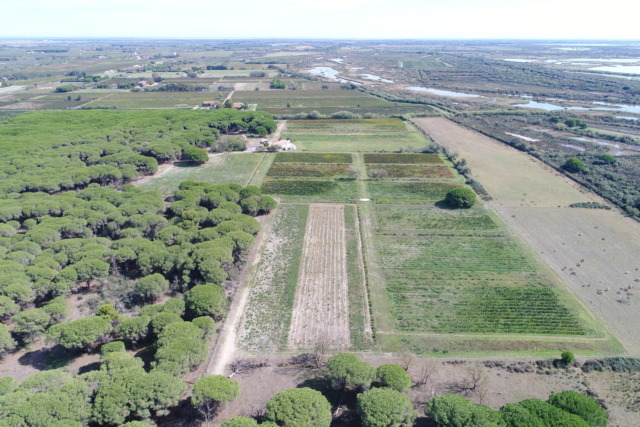
The Tour du Valat Agroecological Farm: Two Sites in the CamargueLocated in the heart of the Camargue, Tour du Valat manages two complementary sites dedicated to research, conservation, and agroecology. The main estate, situated at Le Sambuc (Arles), spans 2,817 hectares, a portion of which is designated as a Regional Nature Reserve. It combines the protection of remarkable natural habitats – such as temporary marshes, sansouïres (salt marshes), salt meadows, and montilles (sandy ridges) – with traditional agricultural activities, including extensive cattle and Camargue horse rearing, as well as organic rice, wheat, and hay cultivation. This area is home to exceptional biodiversity: over 590 plant species, 300 bird species, and more than 1,600 invertebrate species. In the Gard, in western Camargue, the Mas du Petit Saint-Jean (101 hectares) serves as an exemplary site where agriculture and biodiversity coexist, enrich and reinforce each other. It combines natural area management with diversified agricultural production (vineyards, agroforestry, and meadow orchards) and acts as a showcase site to demonstrate the compatibility of farming activities with biodiversity conservation. |