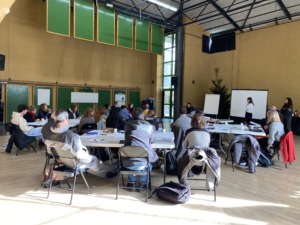
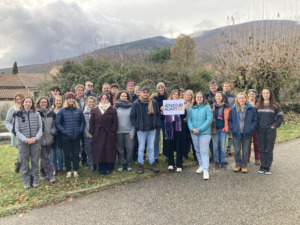
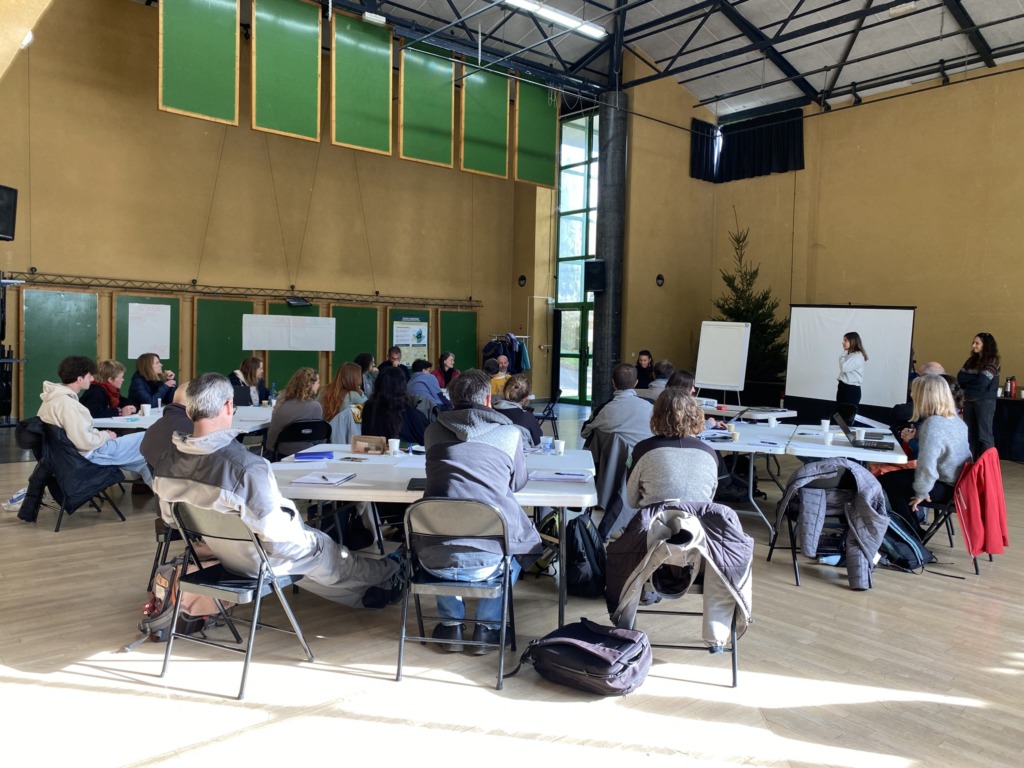
On Thursday 4 December, project managers and reserve managers from Provence-Alpes-Côte d’Azur, accompanied by their technical and financial partners, gathered in Peipin (04) for the third meeting of the Natur’Adapt Sud project. After 18 months of collective work, this meeting was the last opportunity for everyone to share the mesure taken to adapt to climate change, the project’s results and perspectives.
A regional project to adapt to climate change
Launched in July 2024, Natur’Adapt Sud supports the managers of 13 nature reserves in the Provence-Alpes-Côte d’Azur region in integrating climate change issues into their management practices. Coordinated by the Tour du Valat, with the support of the Provence-Alpes-Côte d’Azur Conservatory of Natural Areas and financial support from the DREAL PACA and the Région Sud, the project is based on the Natur’Adapt method. This approach helps managers understand the impacts of climate on their sites and define actions to respond to them.
Each reserve assessed the most vulnerable environments and species, then developed an adaptation plan to respond to the identified climate impacts.
One day to share results, experiences and perspectives
This working day allowed the participants to:
- Present the adaptation strategies currently being developed in each reserve;
- Share the lessons learned from Natur’Adapt: how the approach has changed managers’ outlook on their reserves, their management and their profession;
- Discuss the challenges encountered and the factors for success (support, networking, exchanges with experts and local stakeholders, feedback between sites);
- Discuss perspectives : integration of strategies into management plans, maintaining regional momentum, future support and funding needs.
The spirit of Natur’Adapt Sud is based on a simple but essential idea: collectively anticipating the effects of climate change in order to adapt management and sustainably protect the heritage of nature reserves.
A regional dynamic to be pursued
This meeting demonstrated the value of cooperation between nature reserves. In the Camargue, for example, the Tour du Valat regional nature reserve and the Camargue and Marais du Vigueirat national nature reserves shared their analyses and considered joint approaches to similar threats: rising sea levels, increased salinisation, changes in species populations, etc.
For the teams involved, it is clear that the process does not end with the conclusion of the project. The adaptation plans developed during Natur’Adapt Sud will provide a solid foundation for future management plans, and the desire to continue exchanges between reserves will help maintain this collective momentum.
| Focus on the Tour du Valat Nature Reserve
Analyses carried out as part of Natur’Adapt Sud have highlighted key vulnerabilities linked to future climate changes: rising temperatures, increased salinity and longer periods of drought. The vulnerability to climate change of emblematic habitats – temporary ponds, Mediterranean grasslands, salt marshes, salt meadows, woodlands, temporary marshes and lagoons – and certain heritage species such as the spadefoot toad, marsh herons and European pond turtle have been assessed, as have human activities (agriculture, livestock farming, hunting, public access) and management methods (hydraulics, control of invasive alien species, pastoralism, etc.). This work has made it possible to define an adaptation strategy focused on ecosystem resilience, maintaining adaptive management and anticipating possible changes in habitats and species. |
Project leader : Noémie Nojaroff [1]
Technical partners :
- Conservatoire d’Espaces Naturels de Provence-Alpes-Côte d’Azur [2] (CEN PACA)
- Réserves Naturelles de France [3] (RNF)
- Communauté de communes Alpes d’Azur (CCAA)
Financial partners :
- DREAL PACA [4] (Green Fund 2024)
- Région Sud – Provence-Alpes-Côte d’Azur [5]