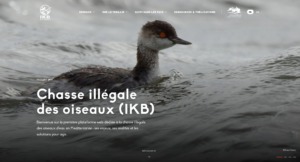
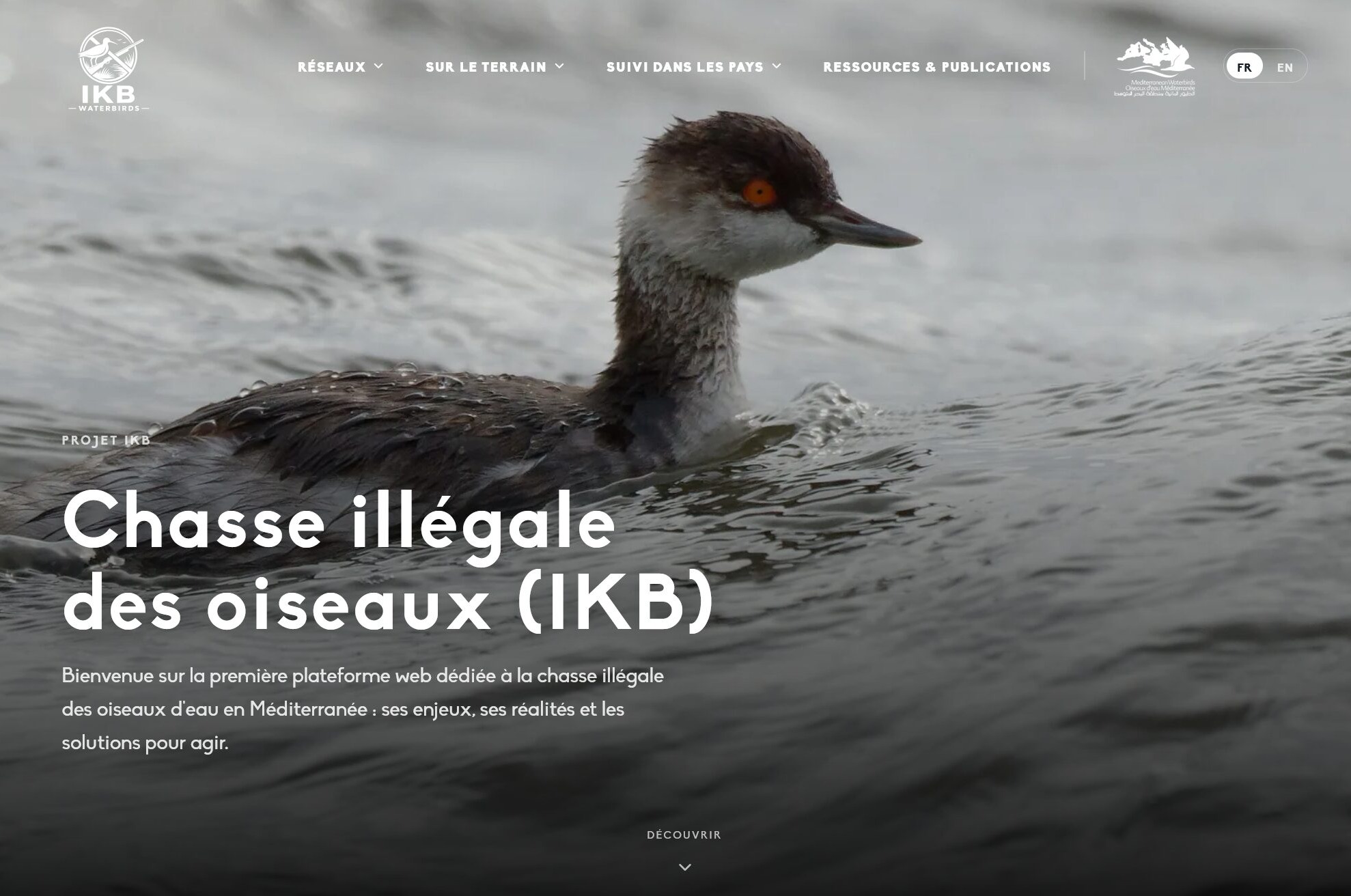
The ROEM network is launching the first web platform dedicated to monitoring the Illegal Killing of Birds (IKB) in the Mediterranean [1]. It outlines the challenges, the realities and the solutions for taking action.
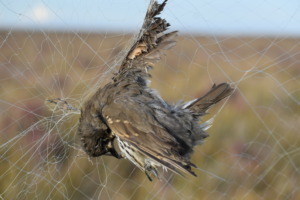
A major challenge for migratory waterbirds
The Mediterranean is a key crossroads for migratory waterbirds. Ducks, flamingos, herons, waders and many others: every year, several million of them stop off there to feed or spend the winter before continuing their journey between Europe, Africa and Asia. These birds depend on wetlands for feeding, breeding and resting.
However, these habitats and the species that depend on them now face numerous threats: climate change, habitat destruction, mass tourism, pollution, illegal hunting and trapping. This is why the Mediterranean Waterbird Network (ROEM) has decided to launch, from 2023, a monitoring programme on the Illegal Killing of Birds (IKB) across eight countries. This new platform [1] brings together the key challenges, current realities on the field and the related findings.
A harmonised protocol across eight countries, with up-to-date information for each country
The monitoring programme is based on a standardised protocol, developed within ROEM to complement the International Waterbird Census (IWC). It stems from initial projects carried out in Tunisia, Albania and Serbia, which enabled partners to share best practice and identify their needs. Adapted to the realities of the field, it has been tested in several countries.
Eight countries are currently taking part: Morocco, Algeria, Tunisia, Libya, Albania, Serbia, North Macedonia and Turkey. For each country, the platform provides up-to-date information on the national context and the challenges posed by IKB.
For the first time, this harmonisation makes it possible to gradually build up a shared database containing concrete, comparable and easy-to-navigate data. It helps to:
- better characterise illegal hunting practices;
- identify the sites and areas most affected;
- better understand the factors associated with this threat;
- guide conservation and protection efforts.
An automatically updated summary of the data, and a dedicated bibliography
Data from illegal hunting monitoring, collected during the waterbird census period, are automatically added to the platform as they are entered in the field. They form part of an easy-to-read summary, available for each of the eight countries as well as at a global level. The website also provides a specific bibliography for those wishing to explore the subject in greater depth.
About ROEM
Founded in 2012 under the Agreement on the Conservation of African-Eurasian Migratory Waterbirds (AEWA), the Mediterranean Waterbird Network brings together national coordinators and partners committed to the monitoring and conservation of waterbirds. In its early days, it brought together the Tour du Valat, the French Office for Biodiversity (then ONCFS) and the five national coordinators from North Africa, with the aim of improving the quantity and quality of data from winter censuses. This data contributes to international analyses coordinated by Wetlands International. Having expanded over the years to include other countries, networks and initiatives, ROEM now promotes the exchange of experiences, scientific and technical cooperation, and the development of joint monitoring programs.