The 2026 ringing of slender-billed gull chicks, organised each year in collaboration with the LPO Paca, successfully ringed nearly 400 chicks at the Vieux Salins colony in Hyères.
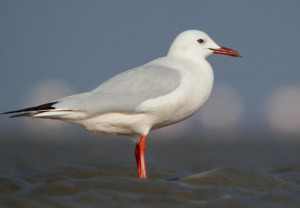
The slender-billed gull, a rare species in France
Smaller and slimmer than the yellow-legged Gull, the slender-billed gull (Chroicocephalus genei) is a migratory bird that specializes in brackish wetlands. Found in Europe, Asia and Africa, its populations are scattered: the majority of breeding pairs are found in Russia, Ukraine and Kazakhstan, but a few thousand are also found in Senegal and Mauritania, and more than 20,000 breeding pairs are present around the Mediterranean.
Although its numbers are on the rise in France, the species was once rare and found only in the Camargue. After being virtually absent until the end of the 20th century, around 800 pairs now breed at a handful of sites along the Mediterranean coast, from the Var to the Aude.
Nearly 400 chicks ringed in 2026

23 June 2026, 5.30 am: as the sun rises over the Hyères salt marshes, the teams are getting ready for the annual ringing campaign. Home to around 440 pairs and 700 chicks, the breeding colony at this site is one of the few breeding colonies of black-headed gulls in France.
Organised in partnership with LPO Paca and the Toulon Provence Méditerranée Metropolitan Area, the operation resulted in the ringing of 382 chicks. The majority of them will leave the Hyères salt marshes as early as this year: this ringing will enable them to be monitored, once they have fledged, as they travel throughout the Mediterranean basin.
A species monitored for nearly thirty years
The research programme on slender-billed gulls was initiated in 1997 by the Tour du Valat. The ringing and re-reading of rings have been less regular in recent years due to logistical constraints. In the Camargue, ringing is complicated by the presence of mixed colonies where slender-billed gulls nest alongside other species (black-headed gulls, sandwich terns, etc.) whose hatching periods are not synchronised with those of the slender-billed gulls. It is therefore impossible to disturb these species, which are still incubating their eggs, with a ringing operation.
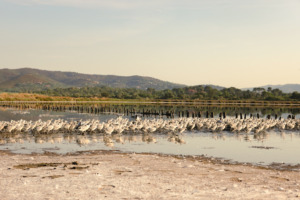
This research programme has provided a better understanding of the factors driving the growth of this population in the south of France (Doxa et al. 2013 [1]) and of how familiarity between individuals influences the species’ dispersal dynamics (Francesiaz et al. 2017 [2]).
This ringing programme enables us to continue this long-term monitoring. It will allow us to study how the demographic parameters and ecology of this species are affected by the major changes affecting Mediterranean wetlands: risk of flooding, salinisation, changes in land use (closure/opening of salt pans), etc.